



Xianyu is one of the best places to find second-hand Chinese goods at a fair price. However, most overseas buyers struggle to complete the checkout process. As the platform’s payment system is built around domestic Chinese infrastructure, the steps that work for local buyers often don’t apply to you. This guide explains which payment methods Xianyu accepts, why overseas accounts encounter problems, and what your options are.
What Payment Methods Does Xianyu Accept?
Xianyu only accepts Alipay. There’s no card entry at checkout, no alternative wallet, and no way around it.
What’s worth knowing is how Alipay actually handles the transaction. When a buyer pays, the money doesn’t go directly to the seller. Instead, it remains with Alipay until the buyer confirms that the item has arrived and matches the description. Only then does the seller get paid. On a second-hand platform where the condition of items varies greatly between listings, that buffer gives them a chance to raise an issue before anything is settled. If the item received doesn’t match the photos, the buyer can flag it before the funds clear.
Why Is It Difficult for Overseas Buyers to Pay on Xianyu?
Alipay was designed for domestic Chinese users, and overseas accounts have significant limitations that become apparent at the payment stage. These aren’t edge cases – most international buyers will experience them at some point.
Verification Limits on Overseas Accounts
Although international users can register for Alipay, full verification requires a Chinese national ID. Without this, your account will be restricted to a lower access tier with tighter transaction limits. Higher-value purchases or first-time transactions often result in extra checks, which can lead to a failed payment. If you still want to try the direct route, the Alipay sign-up guide explains what the international registration process involves and where you’re likely to encounter problems.
Timing and Listing Availability
Xianyu is a second-hand market where popular listings sell fast and rarely come back. If your payment fails on the first attempt and you retry, the item may already be gone. On a retail platform, that’s an inconvenience. On Xianyu, however, it often means losing the item entirely.
Communication and Refund Delays
If you’re not fluent, you may need to put in extra effort to sort out a failed payment or a condition issue, since most Xianyu sellers only write in Chinese. Refunds to overseas accounts also take longer than those to domestic accounts. Additional review steps and currency conversion add up, and what would take a day or two to clear domestically can take several weeks from an overseas account.
How to Pay on Xianyu as an International Buyer
Given the aforementioned limitations, overseas buyers typically have two options: paying directly via Alipay or making purchases through a purchasing agent. Which one is best depends on what you are buying.
Paying Directly Through Alipay
Direct payment works for some purchases. Smaller, lower-value transactions from sellers who don’t require additional verification are processed more consistently than high-value or first-time ones. If you’re testing the platform with a low-stakes item, it’s worth a try. The main drawback is that there is no reliable way to know whether a payment will be successful before attempting it.
For digital goods such as game accounts, in-game items, or virtual products, direct payment is often the more practical choice. These transactions tend to have a lower value and not involve physical shipping, so routing through an agent adds unnecessary steps and costs.
Paying Through a Purchasing Agent
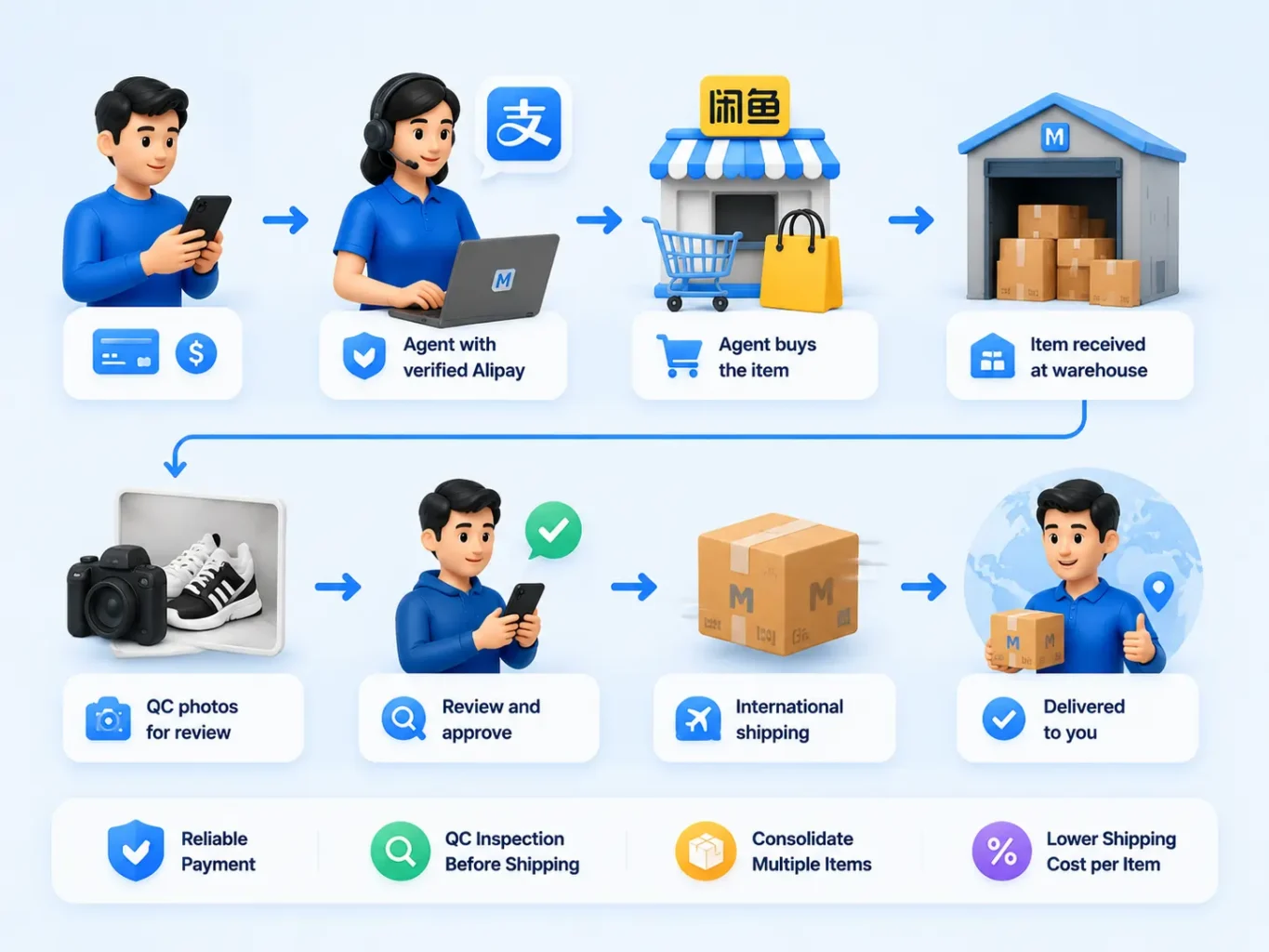
For physical items, particularly those that are time-sensitive, high-value, or difficult to replace, a purchasing agent is the more reliable option. The agent holds a verified Chinese Alipay account, meaning that domestic payments go through without the verification issues that affect foreign accounts. You pay in your own currency, they handle the transaction on the Chinese side, and the item is shipped to their warehouse first.
From there, the process is straightforward:
- The agent buys the item and receives it at their warehouse in China
- They photograph it and send you the inspection images
- You then review the condition and approve the shipment
- The item is then shipped internationally via your chosen method
The inspection step is worth paying attention to. It is difficult to accurately judge the condition of second-hand goods based solely on the photos on the product details page. Compared to processing cross-border returns after goods have been shipped, problems are much easier to discover in the warehouse. Some agents also allow you to consolidate multiple purchases into a single shipment, which helps to reduce the shipping cost per item if you purchase more than one item.
Agents differ on fees, supported platforms, and inspection quality. Mulebuy is an option that, alongside Taobao, Weidian, and 1688, covers Xianyu. It charges no service fee and provides free QC photos. The Mulebuy setup guide provides detailed instructions on how to place your first order.
What Happens If Something Goes Wrong with Your Xianyu Payment?
The answer depends on where the problem lies in the process.
If your payment fails at the checkout stage, Alipay will not charge you. This order cannot be submitted successfully. You can try to make the payment again, but please note that during this time, the items in your order may have been purchased by other customers. Sometimes retrying with a smaller amount or waiting a day helps, but there’s no guaranteed fix for the underlying account restrictions.
If payment goes through but the item arrives in poor condition or doesn’t match the listing, Alipay holds the funds until you confirm receipt. You can open a dispute before the money is released. If it is resolved in your favor, the payment will be returned. Resolving disputes takes time, and because communication with sellers is in Chinese, the process can be drawn out.
Cross-border refunds follow the same pattern. Currency conversion and verification steps extend the timeline. A refund that would take a couple of days domestically can take several weeks if the account is overseas.
Using an agent removes most of this friction. The agent handles seller communication in Chinese, inspects the item before it leaves China, and can manage returns on your behalf if something is wrong. By the time the item reaches you, the condition has already been reviewed and signed off.

Conclusion
Xianyu’s payment system is great for domestic buyers, but it creates real friction for anyone outside China. At checkout, Alipay is the only option, and verification limits on overseas accounts make direct payment unreliable for high-value or time-sensitive purchases. For digital goods and low-value purchases, it is reasonable to try direct payment first. For physical items, however, it is more consistent to go through a purchasing agent: this sidesteps verification issues, adds an inspection step before international shipping, and keeps communication with the seller manageable. Understanding where the friction comes from makes it easier to decide which approach is best for your purchase.
FAQs
Yes, Alipay is the only payment method available on Xianyu. Although international users can register, accounts without Chinese ID verification have lower transaction limits and are more prone to payment failures. If direct payment isn’t working, most overseas buyers use a purchasing agent with a verified domestic account instead.
Not directly. Xianyu doesn’t offer a card checkout option. You can link an international card to Alipay, but the transaction limits on unverified overseas accounts mean card-linked payments still fail on many purchases. Simply linking a card will not resolve the underlying verification issue.
Make sure that you have completed all the verification steps available for international users on your Alipay account. Smaller transaction amounts sometimes go through while larger ones don’t. If the problem persists, using a purchasing agent is a practical alternative, particularly for rare or time-sensitive physical items.