


Have you ever scrolled through Instagram or TikTok and seen someone wearing long, flowing silk robes with wide sleeves? Maybe you saw a beautiful dancer in a historical drama, or a street-style photo from a cherry blossom festival in China. The flowing robes looked elegant, ancient, and different from modern clothes.
You might have wondered what that clothing is called and why so many people are wearing it today. Let’s start with the most basic question: What is Hanfu?
What is Hanfu
Hanfu is the traditional clothing of the Han Chinese people. Flowing silk, crossed collars, sleeves that dance in the wind, this is what Hanfu is. Think of it as the ancestor of the kimono and hanbok, but uniquely Chinese. For more than 4,000 years, from the legendary Yellow Emperor to the Ming Dynasty, it was what people wore every day.
The name simply means “Han clothing.” Although Hanfu varied in style across different dynasties, they all shared some common features: a cross-collar, flowing sleeves, and a waist belt or sash.
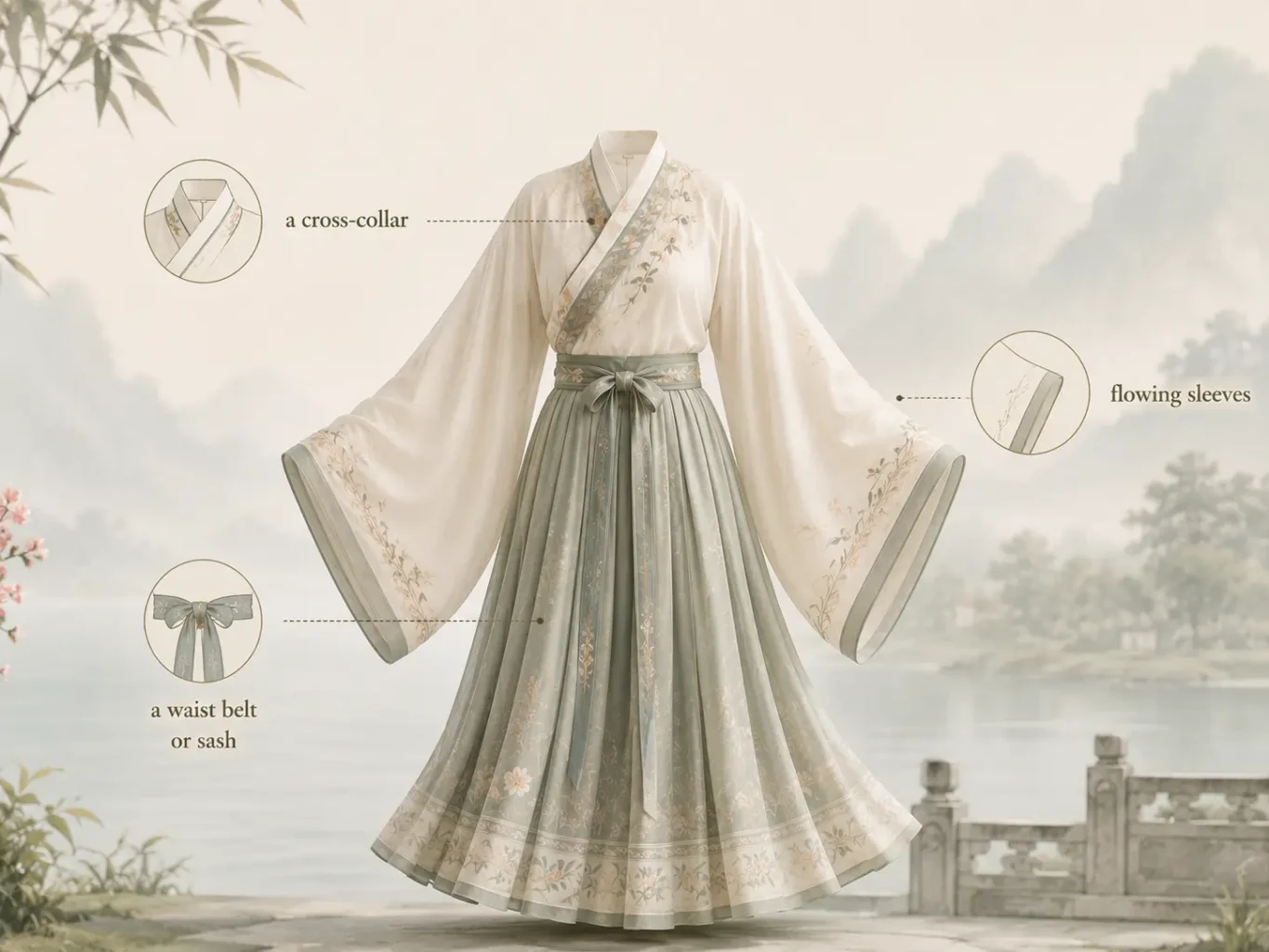
There is one thing you need to know: Hanfu is not a costume or stagewear. It is real historical clothing, reconstructed from ancient artifacts, murals, and historical texts.
The Main Features of Hanfu
Hanfu looks very different from Western clothing because of how it is made. Western clothing uses tight fits and curved cuts to follow the body, while Hanfu uses straight seams and flat cuts, letting the fabric hang naturally into a soft, flowing silhouette.
Take a look at the collar. On Hanfu, it crosses over with the left side wrapping over the right, which is called jiaoling youren. If you wrap it the other way, right over left, that is traditionally reserved for the deceased, so it is worth getting it right.
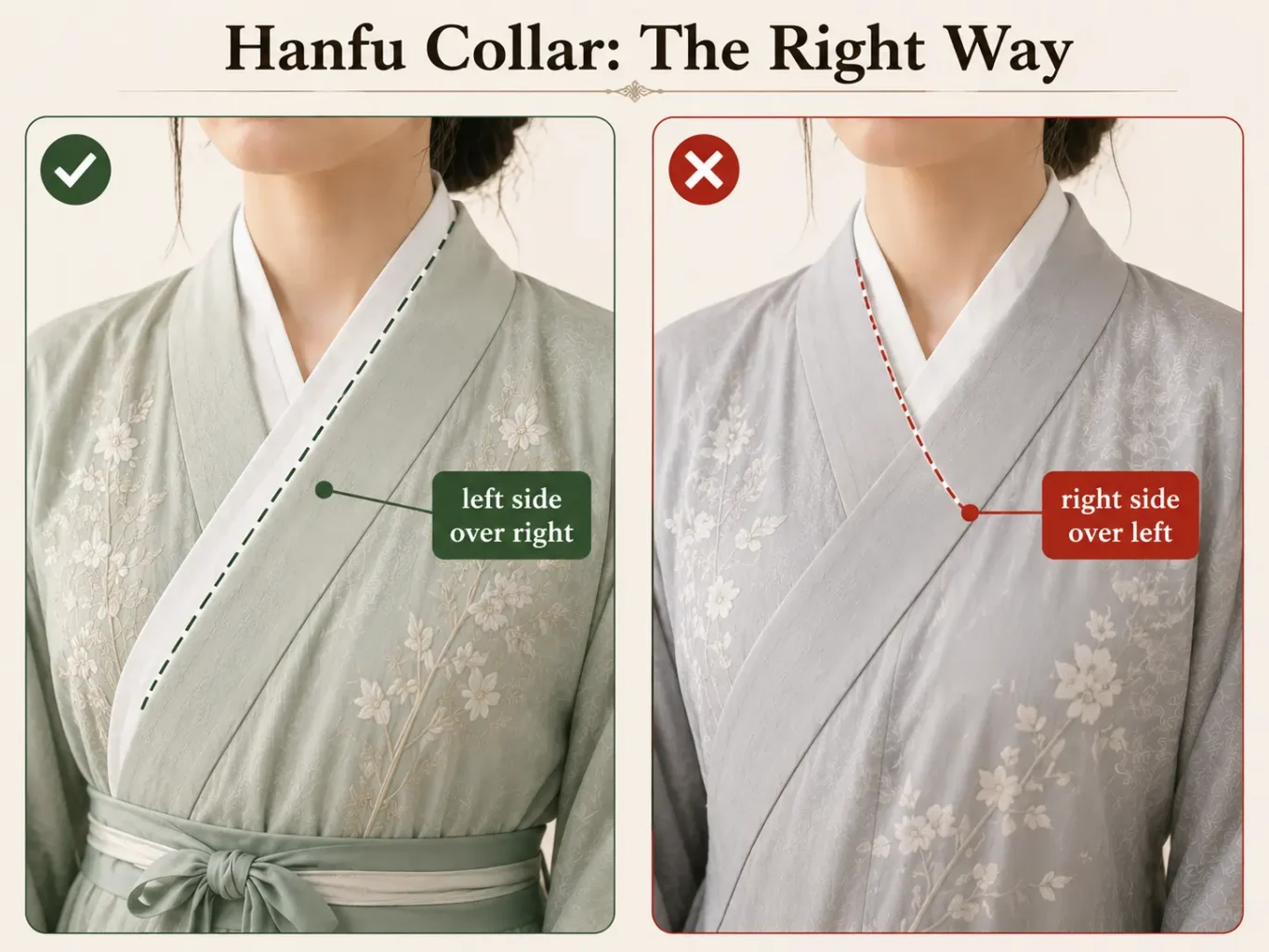
Common features include:
- Collar types: crossed collar (left over right) or straight collar (opening down the middle)
- Sleeve styles: wide sleeves, straight sleeves, or narrow sleeves
- Belt: a silk or fabric sash at the waist to secure the garment
- Layering: multiple layers are common, especially in formal wear
These designs were not random; they followed Confucian values like modesty, order, and harmony with nature.
Hanfu Styles Through Different Dynasties
Hanfu evolved over time, and each dynasty brought its own style. Here are four you should know.
Han Dynasty – The Shenyi
The Han Dynasty (206 BCE – 220 CE) is known for the Shenyi, which means “deep garment.” It was a long, full-length robe that wrapped across the body in layers, with the left side covering the right. Unlike later dynasties such as Tang and Ming, which used separate tops and skirts, the Shenyi was a continuous piece. Its clean lines and simple silhouette made it a favorite among scholars and government officials.
Tang Dynasty – The Ruqun
The Tang Dynasty (618–907 CE) was a time of wealth, openness, and cultural exchange. Hanfu became more colorful and daring. The most iconic style was the Qixiong Ruqun, a high-chest skirt with the waistline tied just under the armpits. This created a full, flowing silhouette that made the wearer look taller and more graceful. When many Westerners think of traditional Chinese clothing, they tend to picture the Tang style.
Song Dynasty – The Beizi
The Song Dynasty (960–1279 CE) favored modesty and refinement. Hanfu became slimmer, more understated, and less flashy than the Tang. The signature piece was the Beizi, a long, straight-cut jacket worn open over a long skirt. The colors were softer, and the overall look was elegant but relaxed. Think of it as the “smart casual” of ancient China, comfortable enough for daily wear, but still put together.
Ming Dynasty – The Mamianqun
The Ming Dynasty (1368–1644 CE) made Hanfu more structured and formal. One of the most famous innovations was the Mamianqun, or “horse-face skirt.” This skirt has smooth, flat panels on the front and back, with pleats folded neatly on the sides. It was often embroidered with gold or silver thread. Women wore it with a short matching jacket called an ao. Today, the Mamianqun is one of the most popular Hanfu styles for beginners. It is easy to wear and looks great with both traditional and modern tops.
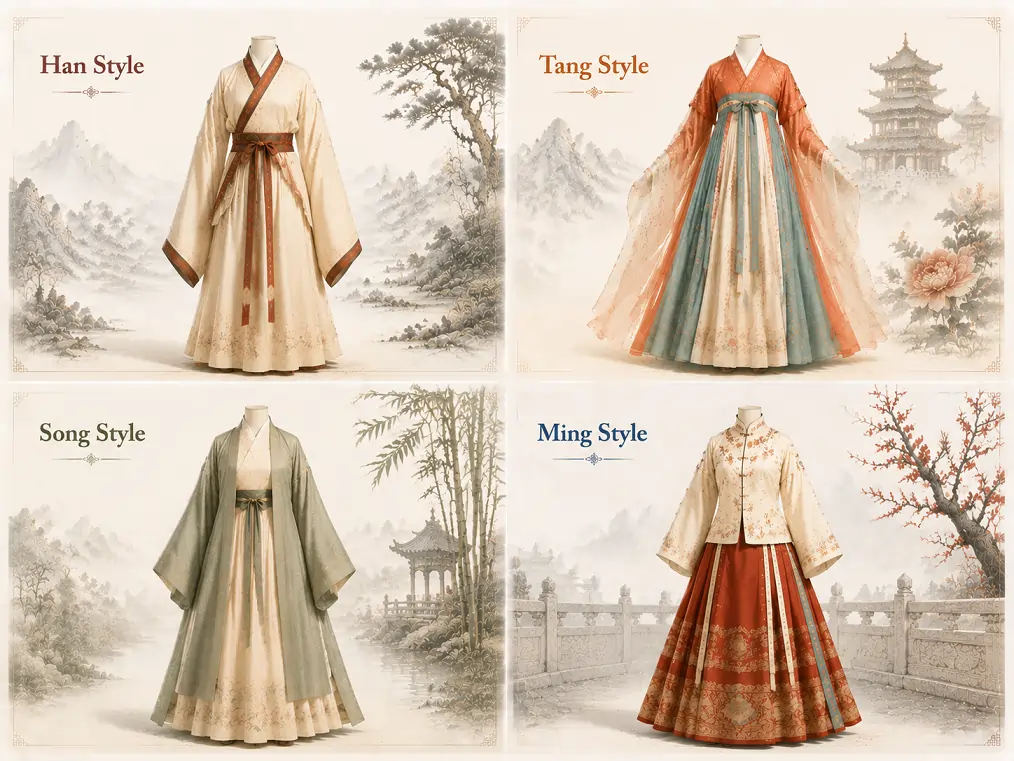
Not sure which style to try first? If you prefer an elegant, classic look, try the Ming style. If you prefer a more flowy and colourful look, try the Tang style. Song style is a great choice for a minimalist daily look.
Why Hanfu Disappeared and Came Back
You might wonder: if Hanfu was worn for 4,000 years, why did it disappear? After the Ming Dynasty fell in 1644, the new Qing Dynasty required Han Chinese to wear Manchu-style clothing. Hanfu was banned for nearly 300 years. That is why it faded from everyday life for generations. So how did it come back?
Around the early 2000s, young Chinese began rediscovering their heritage by researching ancient paintings, murals, and artifacts to recreate Hanfu. What started as a small online community has since grown into a nationwide movement. Today, a growing number of young people wear Hanfu with pride.
On TikTok and Instagram, Hanfu videos have received billions of views. It is no longer a niche interest but a growing cultural movement.
How to Buy Hanfu Outside China
By now, you might be thinking, “I want to try Hanfu myself.” Most Hanfu is sold on Chinese e-commerce platforms like Taobao, Tmall, Weidian, and Xianyu.
But there are three practical issues:
- The platforms are mostly in Chinese
- Many sellers do not ship overseas
- Platforms generally do not accept international credit cards
So, how can you easily buy Hanfu from China? The answer is to use a purchasing agent service. These services purchase items from Chinese platforms on your behalf, check their quality, and ship them to you.
One such agent is Mulebuy. Using it is simple: find a Hanfu you like, copy its product link, and paste it into Mulebuy. Then they handle purchasing, quality checking, and international shipping for you.

Before you buy your first Hanfu, keep these tips in mind:
- Basic top and skirt set: $30–$80; high-end handmade pieces: over $200
- Extra layers, belts, or hairpieces shown in product photos are usually sold separately
Can You Wear Hanfu in Daily Life
Yes, you can. Many people wear Hanfu as everyday clothing.
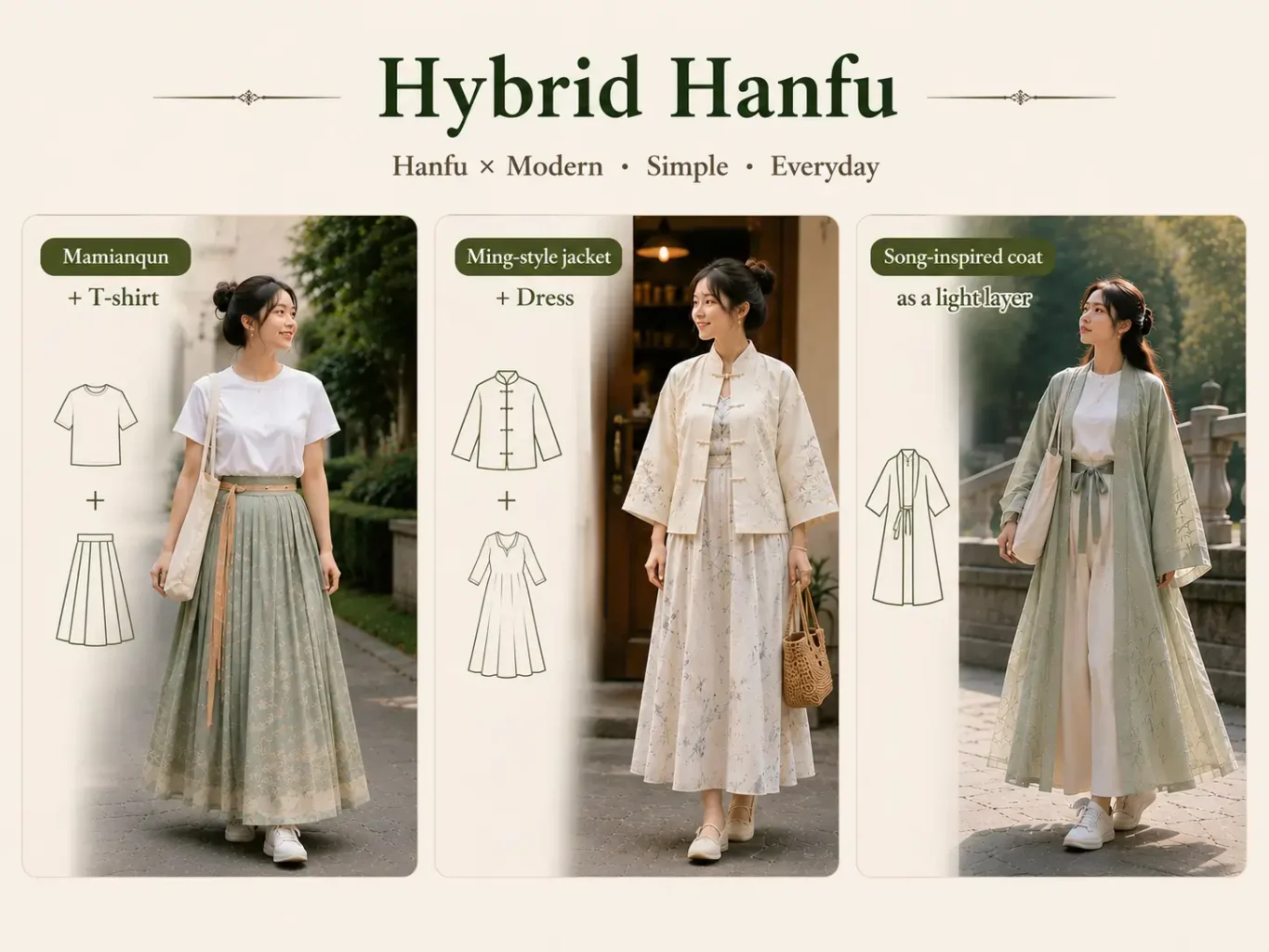
A good rule is to keep it simple. A Mamianqun with a white T-shirt, a Ming-style jacket over a dress, or a Song-inspired coat as a light layer. These are easy ways to start, and you don’t need a full traditional set.
This relaxed way of wearing Hanfu is often called “hybrid Hanfu.” It’s comfortable and low-key, perfect for daily activities like going to work, running errands, or meeting friends. For weddings or formal ceremonies, people still wear full, traditional Hanfu.
Once you have your first Hanfu, here are some care tips: hand-wash silk and embroidered pieces in cold water with mild detergent. Cotton and linen blends can go in a laundry bag on a gentle cycle. When in doubt, check the care label.
Conclusion
So now you know what Hanfu is. It’s the traditional clothing of the Han Chinese people, with a history of thousands of years and many different styles.
You’ve learned about its key features, the four main dynasty styles, why it disappeared, and how it came back. You also know that a purchasing agent service can help you buy Hanfu from abroad.
And yes, you can wear Hanfu in daily life. It’s best to keep it simple, mix it with modern clothes, and follow the care tips.
Whether you’re curious or ready to buy your first set, Hanfu is open to everyone. Just remember to wear the collar correctly: left over right.
Frequently Asked Questions (FAQs)
Yes, most Chinese people are happy to see foreigners wearing Hanfu. It shows appreciation for Chinese culture, not disrespect. The only rule is to wear the collar correctly, left over right, and avoid wearing it as a joke or Halloween costume.
Yes, men’s Hanfu typically features straighter cuts, shorter robe lengths, and more subdued colors. Styles like the Shenyi (Han Dynasty) or Daopao (Ming Dynasty) are classic men’s choices. Many men wear Hanfu for weddings, ceremonies, or daily fashion.
No, most modern Hanfu wearers keep their natural hair and everyday makeup. You can wear Hanfu with a ponytail, loose hair, or even a baseball cap. For photoshoots or formal events, some people add traditional hairpins or wigs, but for daily wear, simplicity works perfectly.
Yes, more than you might expect. Daily-wear Hanfu (like Song or Ming casual styles) uses straight or narrow sleeves and shorter hemlines, so walking and sitting are easy. For biking, you can choose a straight sleeve top and tie up the skirt slightly. Full ceremonial robes with wide sleeves are usually saved for events or photos.